

Therapy for Chronic Pain and Illness
When your body changes, your whole life can change with it.
Chronic pain and illness have a way of reaching into places that other people may never see.
Your energy changes. Your routines change. Relationships shift. Work may become harder. Plans become less predictable. You might spend more time managing appointments, symptoms, medications, paperwork, accommodations, and the constant calculation of what your body can handle today.
And then there is the emotional part.
The grief. The frustration. The fear. The anger. The isolation. The exhaustion of having to explain yourself, or prove that what you are experiencing is real.
I don’t see those responses as signs that you are coping badly.
Sometimes your nervous system is responding exactly as you would expect after living with uncertainty, pain, changing capacity, and systems that ask you to keep functioning as though nothing has changed.
Therapy for chronic pain and illness gives you somewhere to stop performing wellness and talk honestly about what this experience has actually been like.
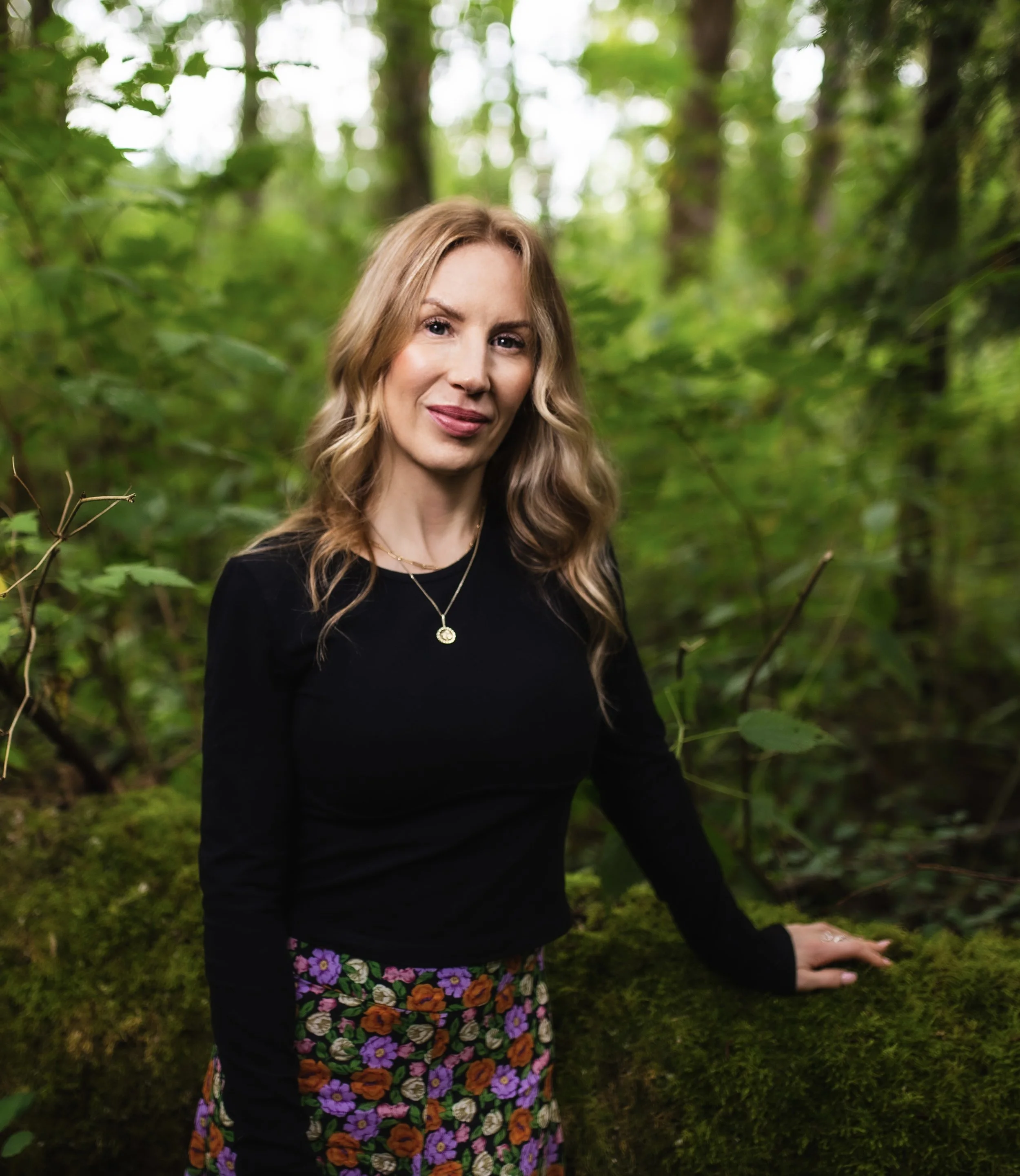
Hi, I’m Claire.
I’m a Registered Clinical Counsellor, and I have spent the past 14 years supporting people living with chronic pain, illness, trauma, major health changes, burnout, and the grief that can accompany changes in the body.
I also understand this work personally… in my own lived experience and within my family.
That has shaped the way I think about therapy.
I know that living with a health condition is rarely just about symptoms. It can affect identity, work, parenting, relationships, finances, independence, plans, and the way you move through the world.
I also know how exhausting it can be to exist in systems that often expect people to advocate endlessly, wait patiently, stay positive, remain productive, and explain their limitations over and over again.
So when we work together, I am not coming from the assumption that you need to try harder, think more positively, or become better at pushing through.
I’m much more interested in helping you listen to your body, understand what you have been carrying, and create a life that is more sustainable within the reality you are living.
You Are More Than a Set of Symptoms
One of the hardest parts of chronic illness can be how quickly your life becomes organized around your body.
Appointments. Flares. Test results. Medications. Energy levels. Pain scales. What you can do. What you cannot do.
It can become difficult to remember who you are outside of all of that.
You may be grieving:
The energy or abilities you once had
Activities that are no longer accessible
A career or role that has changed
Relationships that feel different now
Independence or spontaneity
Plans you had for the future
Feeling believed or understood
The person you expected to become
That grief does not always happen once.
It can return when symptoms change, another limitation appears, or a part of your life needs to be renegotiated again.
I don’t see grief as something we need to rush through.
Grief can help us acknowledge what mattered, what changed, and what still matters now.
Acceptance does not have to mean liking what happened.
Sometimes it simply means no longer fighting yourself for having a human response to it.


The Problem Isn’t Always Inside You
Chronic illness often happens inside systems that were not designed for people with fluctuating capacity.
Workplaces may reward consistency over sustainability.
Healthcare systems may require enormous amounts of self-advocacy from people who are already exhausted.
Friends and family may understand visible illness more easily than symptoms they cannot see.
You may be praised for pushing through and questioned when you stop.
Over time, it is easy to internalize the idea that you should be doing more, trying harder, staying more positive, or managing everything with less impact on the people around you.
Therapy can be a place to challenge that.
We may ask:
What is your body actually asking for?
Which expectations are realistic?
What support should exist but doesn’t?
Where are you overriding your limits to keep other people comfortable?
What would change if you believed your needs were legitimate?
Sometimes the work is about building resilience.
Sometimes it is about no longer adapting yourself to conditions that are not sustainable.
This Might Be a Good Fit If...

My work tends to be a good fit for people who want more than strategies for “coping better.”
You may already understand your condition well. You may have spent years learning about pacing, treatment, nervous system regulation, or self-care.
And yet something deeper still feels unresolved.
You may be ready to:
Grieve what has changed instead of constantly trying to rise above it
Explore the emotional impact of illness without being told your symptoms are psychological
Listen to your body instead of automatically overriding it
Question beliefs about productivity, independence, and worth
Set boundaries that others may not always understand
Ask for support without treating it as failure
Work through medical trauma or difficult healthcare experiences
Reconsider what a meaningful and sustainable life looks like now
Develop more trust in yourself and your own experience
My practice is best suited to clients experiencing mild-to-moderate concerns who have enough stability in daily life to engage in reflective, depth-oriented therapy. It is not designed to provide acute crisis stabilization or intensive mental health care.
Most of my counselling work happens online.
For people living with chronic pain or illness, that flexibility can make therapy significantly more accessible.
You do not need to spend energy travelling to an office, sitting in an uncomfortable waiting room, or figuring out transportation on a day when your symptoms are unpredictable.
You can attend from a space where your body is more comfortable. You can change positions, keep supportive items nearby, take a break if needed, or talk with me about other accommodations that would make the session easier to access.
I’m based in Langley, British Columbia and work virtually with clients across Canada where my professional scope permits.
Online Therapy for Chronic Pain and Illness Across Canada
Frequently Asked Questions
-
Therapy cannot remove a medical condition, and it does not replace medical care.
What it can offer is support for everything that comes with living in a changing or unpredictable body, grief, fear, medical trauma, identity shifts, boundaries, relationships, work, isolation, and the pressure to keep functioning.
-
No.
Your physical symptoms are real.
I am interested in supporting the emotional and nervous-system impact of living with pain or illness, not questioning whether the condition itself exists.
-
That is something we can make space for.
Being dismissed, disbelieved, misdiagnosed, or frightened during medical care can affect how safe it feels to seek help again.
You do not need to defend your experience with me.
-
Often, yes.
Online therapy gives us more flexibility to work around your body. You are welcome to change positions, rest, take breaks, reduce visual stimulation, or let me know that you have less capacity than usual that day.
We can adjust the session to meet you where you are.
-
Many extended health plans cover counselling with a Registered Clinical Counsellor.
Coverage varies by plan, so it is worth checking directly with your provider. Receipts are provided after paid sessions.
Counselling Rates
Online Counselling
Available for clients across Canada.
Sessions are typically scheduled weekly or every two weeks depending on your needs, capacity, and goals.
50 minutes | $200
Free Video Consultation
A 20-minute conversation to get a feel for one another.
You can tell me a little about what has been bringing you to therapy, ask whatever questions you have, and decide whether my style feels like a fit.
20 minutes | Free
Living with chronic pain or illness can require an enormous amount of adaptation, often in ways that nobody else sees.
You are allowed to be tired of adapting.
You are allowed to grieve.
You are allowed to need more support.
And you are allowed to build a life around what your body actually needs rather than constantly measuring yourself against what you used to be able to do.
Therapy can be one place to begin listening to that.