

PTSD and Trauma Counselling
When the danger is over, but your nervous system hasn’t gotten the message.
Trauma can change the way you move through the world.
You may know, logically, that you are safe now, and still find yourself bracing for what might happen next.
You might feel constantly alert. Easily overwhelmed. Disconnected from your body. Quick to shut down. Unable to fully relax even when nothing is wrong.
Or maybe your trauma looks quieter than that.
You function. You work. You take care of people. You keep going.
But underneath it, something still feels unsettled.
PTSD and trauma counselling can help you understand the protective responses your mind and body developed, and gradually create more room for safety, connection, and a calmer way of living.
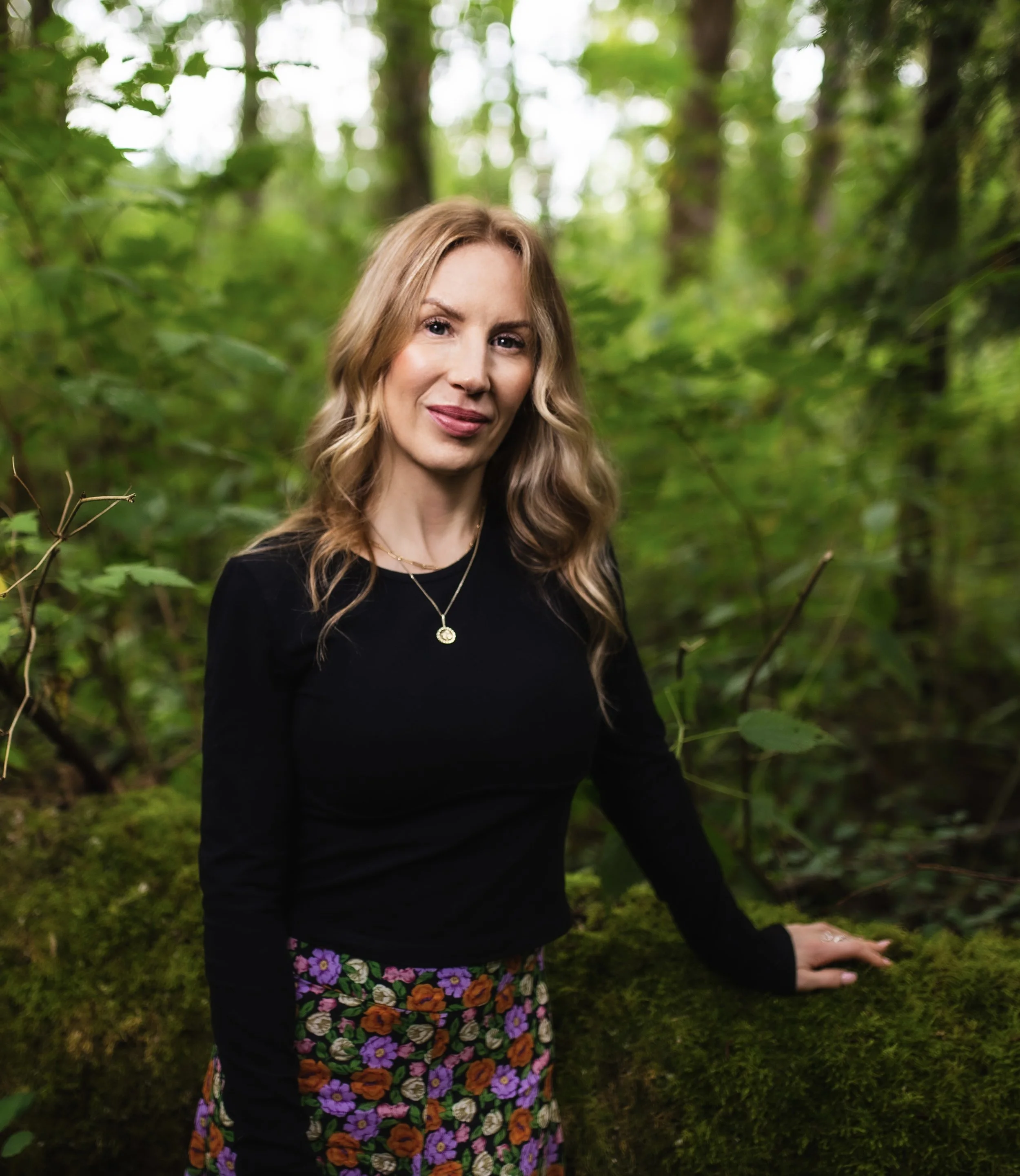
Hi, I’m Claire.
I’m a Registered Clinical Counsellor, and for the past 14 years I’ve supported people living with trauma, PTSD, complex trauma, chronic stress, and the long-term impact of experiences that overwhelmed their ability to cope at the time.
My experience comes from thousands of hours of direct client work, more than 1,000 hours of mentorship and supervision related to trauma, formal training in approaches including OEI and Lifespan Integration, and extensive work with parts-based and somatic therapies.
It also comes from lived experience.
That matters to me because trauma work is not something I approach only from a textbook.
I understand what it can be like to intellectually know one thing while your body seems convinced of something else. To recognize that a pattern no longer makes sense in your current life and still feel unable to simply switch it off.
I don’t see those responses as evidence that something is wrong with you.
Usually, they tell us something about what your nervous system learned it needed to do to keep you safe.
Your Responses Make Sense in Context
Trauma is often talked about as though the goal is to eliminate symptoms.
I think it is more useful to begin by understanding them.
Hypervigilance may have helped you anticipate danger.
Shutting down may have helped you survive something overwhelming.
People-pleasing may have helped keep relationships safer.
Staying constantly busy may have helped you avoid emotions that once felt impossible to hold.
Disconnecting from your body may have been protective when being fully present in it did not feel safe.
These responses can become painful when they continue long after the original danger has passed, but they did not develop because you failed.
They developed because your nervous system adapted.
Therapy gives us a place to understand those adaptations before asking them to change.


Slowing Down Can Be Part of the Work
For many trauma survivors, doing more feels safer than doing less.
You may be very capable.
Very productive.
Very good at managing a crisis.
And surprisingly uncomfortable when there is nothing to manage.
Sometimes trauma therapy involves learning to tolerate calm.
To stay with a feeling instead of immediately solving it.
To notice tension before it becomes overwhelm.
To let somebody support you instead of automatically becoming the person who takes care of everyone else.
To discover that rest does not have to be earned.
This can sound simple.
It often isn’t.
If your nervous system has spent years organized around survival, slowing down can be a significant piece of the healing process.
This Might Be a Good Fit If...

My practice is best suited to people with mild-to-moderate PTSD or trauma-related concerns who have enough stability in daily life to engage in reflective, depth-oriented therapy.
You may already have done some counselling or personal growth work and understand many of your patterns intellectually.
Now you may be ready to:
Slow down and pay attention to what happens in your body
Explore difficult emotions without immediately pushing them away
Understand protective patterns with less judgment
Work gradually with traumatic experiences
Develop greater nervous system flexibility
Question beliefs that were shaped by past experiences
Build relationships that feel safer and more reciprocal
Set boundaries that reflect who you are now
Move away from a life built around constant urgency
Make meaningful changes so your life feels calmer and more sustainable
This work is not intended for people who are currently experiencing severe or acute PTSD symptoms, significant instability, active crisis, or who require intensive trauma treatment.
If you are unsure whether my practice is the right level of support for you, we can talk about that during a consultation.
Most of my counselling work happens online.
For trauma work, being able to meet from your own space can sometimes make it easier to feel grounded and in control of your environment.
You can choose where you sit, adjust lighting or sound, keep comforting objects nearby, move your body, take a break, or let me know when something feels like too much.
I’m based in Langley, British Columbia and work virtually with clients across Canada where my professional scope permits.
My limited in-person availability is reserved primarily for Psychedelic-Assisted Therapy, so general PTSD and trauma counselling is offered online.
Online PTSD and Trauma Counselling Across Canada
Frequently Asked Questions
-
No.
You may have a formal diagnosis, recognize PTSD symptoms, or simply know that past experiences are still affecting your nervous system, relationships, or daily life.
A diagnosis is not required to begin counselling.
Having a comfortable and pri
-
No.
Trauma therapy does not require you to immediately tell the entire story or revisit experiences in detail.
We begin with safety, trust, and your current capacity. You remain in control of what you share and how quickly we move.
-
PTSD can develop after experiencing or witnessing traumatic events.
Complex trauma often refers to the impact of repeated or prolonged experiences, particularly when they occur within relationships, childhood, or environments where escape was difficult.
There can be significant overlap, and we do not need to perfectly categorize your experience before beginning therapy.
-
Yes.
Hypervigilance is often a protective nervous-system response.
Rather than treating it as a bad habit, we can understand why your body learned to stay alert and gradually help your nervous system recognize when that level of protection is no longer necessary.
-
Yes.
I work primarily online with clients across Canada where permitted within my professional scope.
Counselling Rates
Online Counselling
Available for clients across Canada.
Sessions are typically scheduled weekly or every two weeks depending on your needs, capacity, and goals.
50 minutes | $200
Free Video Consultation
A 20-minute conversation to get a feel for one another.
You can tell me a little about what has been bringing you to therapy, ask whatever questions you have, and decide whether my style feels like a fit.
20 minutes | Free
The responses that helped you survive were there for a reason.
They do not need to become your permanent way of moving through the world.
Therapy can be a place to understand what your nervous system learned, appreciate how hard it worked to protect you, and gradually show it that life can include something other than vigilance, urgency, or bracing for what comes next.
There can be room for calm, connection, rest, and a life that feels safer to actually inhabit.