

Counselling for Life Transitions
Sometimes the life that used to fit you... doesn’t anymore.
Maybe something changed suddenly.
A relationship ended. Your health shifted. You lost a job. You became a parent. You moved somewhere new. Someone died. A role you built your identity around no longer feels like yours.
Or maybe nothing dramatic happened at all, you just know that the way you have been living is not working anymore.
Transitions can be disorienting because they put us between versions of ourselves. The old way no longer fits, but the next one may not be clear yet.
Counselling for life transitions gives you somewhere to stay with that uncertainty rather than rushing to solve it.
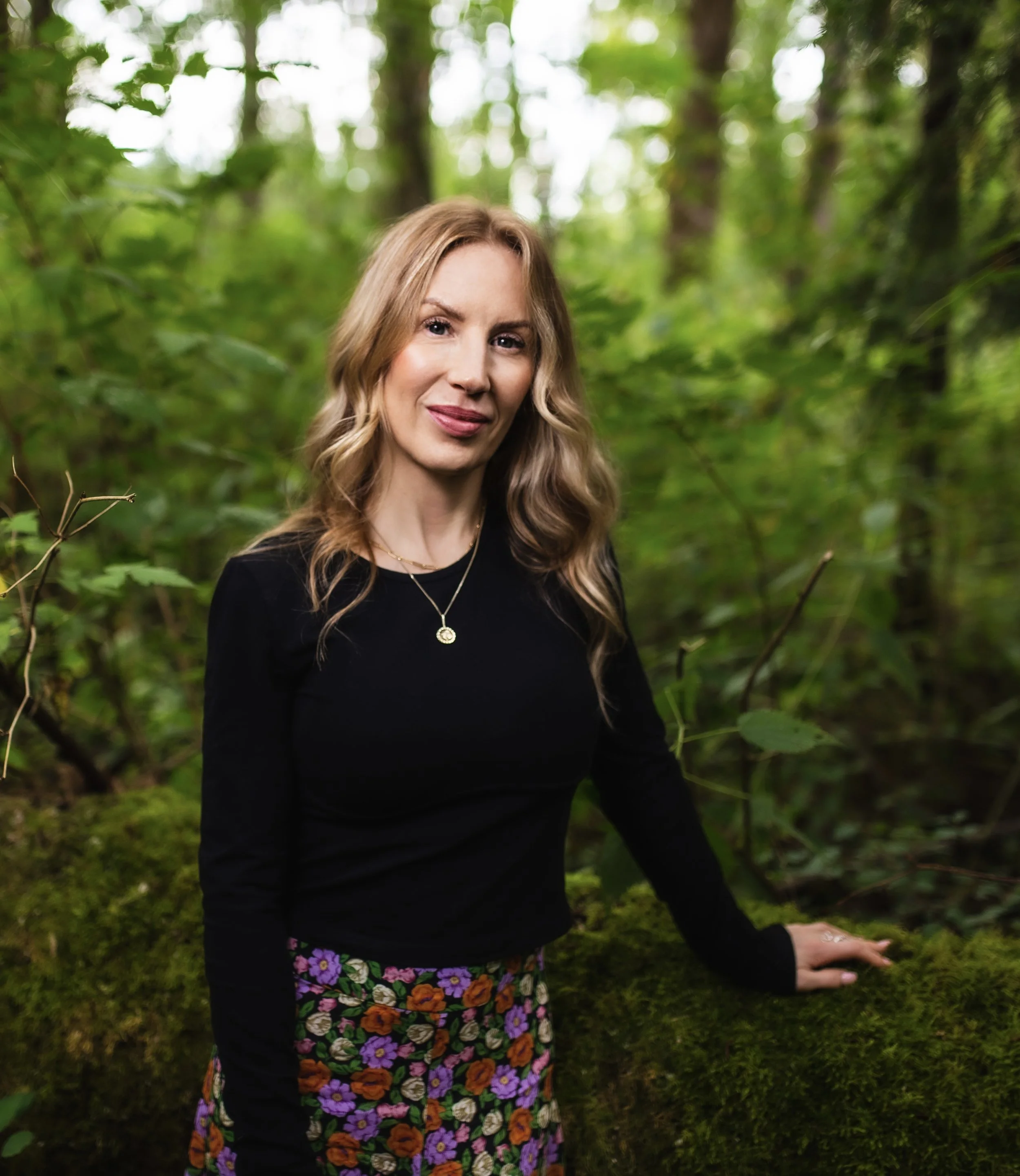
Hi, I’m Claire.
I’m a Registered Clinical Counsellor, and for the past 14 years I’ve worked with people moving through major changes in identity, relationships, work, health, family, grief, and belonging.
I also know transition from the inside.
My own life has included career changes and losses, chronic health challenges, motherhood, grief, pregnancy loss, immigration, culture shock, and the experience of rebuilding a sense of home and identity in different countries and communities.
I've lived and worked in Taiwan, Thailand, Mexico, and Canada. Along the way, I've known the disorientation of culture shock, and I've also had the chance to learn from cultural and spiritual traditions very different from my own. Both have shaped the way I think about change and the way I work with clients today..
Transitions are not just individual psychological events. They happen inside families, workplaces, cultures, communities, and systems. When one part of your life changes, the ripple effects can reach everywhere.
My role is not to tell you what your next chapter should look like.
It is to help you slow down enough to hear what is true for you.
“It got me unstuck… this was the only thing that finally moved the dial. I felt safe and supported the whole way."
— David, PAT Program Participant
What Might Bring You Here

Counselling for life transitions can support many different kinds of change, including:
Career changes, job loss, or burnout
Separation, divorce, or changing relationships
Becoming a parent or changes within family life
Moving, immigration, or adjusting to a new culture
Chronic illness, diagnosis, injury, or changes in physical capacity
Caregiving and changing family roles
Children leaving home
Retirement or leaving a long-held profession
Grief and bereavement
Loss of community, identity, or belonging
Spiritual or existential changes
A growing sense that your current life is no longer sustainable
Realizing you want something different, even when you cannot name what that is yet
You do not need to wait until a transition becomes a crisis.
Sometimes therapy begins with something much quieter:
I don’t think I can keep doing things this way.
Grief Is Often Part of Change
One of the things I believe deeply is that grief is not something we need to get around.
Grief can be transformational.
We often associate grief with death, but we grieve whenever something meaningful changes.
You may be grieving a relationship, a career, your health, a version of your body, a home, a community, a future you expected to have, or simply the person you used to be.
Even wanted transitions carry loss.
Becoming a parent may mean grieving freedom or an old identity.
Leaving an unhealthy relationship may mean grieving the future you once imagined.
Changing careers may bring relief while also asking you to let go of years of investment and identity.
Receiving a diagnosis can bring answers and grief at the same time.
Sometimes our culture is very uncomfortable with this. There is pressure to be resilient, find the lesson, look on the bright side, and move forward.
I’m much more interested in making space for what the transition is actually asking of you.
When grief is allowed to be felt rather than treated as a problem to solve, it can change our relationship to what happened, and sometimes show us what matters enough to carry forward.
This Might Be a Good Fit If...

My work tends to fit people who are not looking for someone to hand them a checklist for how to “move on.”
You may already have done therapy or personal growth work. You might understand your patterns quite well and still feel as though something deeper needs attention.
You may be ready to:
Slow down instead of immediately finding the next solution
Make room for grief instead of trying to get rid of it
Explore difficult emotions and body sensations
Question expectations you have carried for a long time
Look honestly at relationships, work, family, or lifestyle patterns
Set boundaries that may change how other people relate to you
Trust your own inner authority more deeply
Make significant changes when your current way of living is no longer sustainable
You do not need to know exactly where you are going.
You just need enough curiosity to begin paying attention.
My practice is best suited to people experiencing mild-to-moderate concerns who have enough stability in daily life to engage in reflective, depth-oriented therapy. It is not designed for acute crisis stabilization or intensive mental health care.
Most of my counselling work happens online.
For people going through major changes, that flexibility can matter. You may be managing a move, new job, caregiving responsibilities, changing health, parenthood, grief, or simply a life that already has very little room left in it.
Therapy does not need to become another complicated thing to organize.
I’m based in Langley, British Columbia and work virtually with clients across Canada where my professional scope permits.
My limited in-person availability is reserved primarily for Psychedelic-Assisted Therapy, so general counselling for life transitions is offered online.
Online Counselling for Life Transitions Across Canada
Frequently Asked Questions
-
Almost any meaningful change can be a life transition if it affects how you experience yourself or your life.
That may include career changes, relationships ending or beginning, parenthood, health changes, immigration, caregiving, retirement, grief, relocation, or changes in identity and belonging.
Sometimes the transition is external. Sometimes it begins with an internal realization that something no longer fits.
-
Yes.
Choosing a change does not mean you will only feel positive about it.
You can know that leaving a job, ending a relationship, moving, or setting a boundary was the right choice and still grieve what it cost you.
Therapy makes room for both.
-
Because change usually involves both beginning and ending.
Even when we are moving toward something we want, we may be leaving behind familiarity, relationships, roles, expectations, or versions of ourselves that mattered.
I see grief as part of the transformational process of change, not evidence that you are failing to move forward.
-
You do not need to know.
Counselling can be a space to slow down enough to notice what feels true before making the next decision.
Sometimes the work is less about finding the answer and more about reconnecting with your ability to trust yourself when the answer comes.
-
Not necessarily.
Some people come for support around one specific decision or change. Others discover that the transition has opened deeper questions about identity, relationships, trauma, family patterns, or how they want to live.
We can follow what emerges rather than deciding in advance how long the work should take.
-
Yes.
I work primarily online with clients across Canada where permitted within my professional scope.
Counselling Rates
Online Counselling
Available for clients across Canada.
Sessions are typically scheduled weekly or every two weeks depending on your needs, capacity, and goals.
50 minutes | $200
Free Video Consultation
A 20-minute conversation to get a feel for one another.
You can tell me a little about what has been bringing you to therapy, ask whatever questions you have, and decide whether my style feels like a fit.
20 minutes | Free
There can be a lot of pressure to turn change into a neat story.
What happened. What you learned. Where you are going next.
Real transitions are usually messier than that.There may be grief to feel, identities to reconsider, boundaries to change, and questions that do not have answers yet.
You are allowed to spend some time in that in-between place.
Sometimes that is exactly where something new begins.